
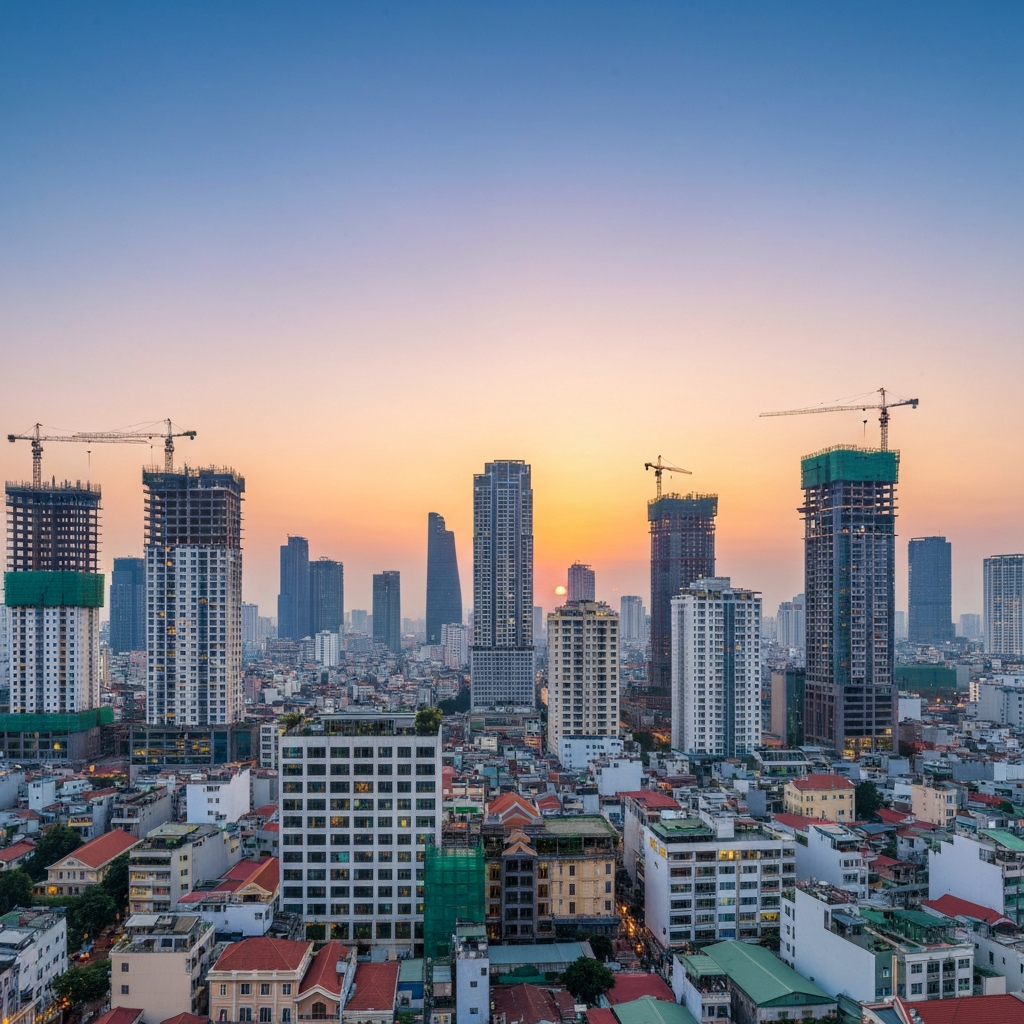
Ho Chi Minh City’s real estate market is undergoing significant transformations, influenced by various factors including supply dynamics, pricing trends, and the persistent demand for affordable housing.
Surge in New Supply
Recent reports indicate a notable increase in new residential supply. In Q4 2025, the city witnessed a dramatic surge in new apartment launches, with 3,358 units introduced—a fivefold increase compared to the previous quarter. This resurgence is attributed to improved infrastructure connectivity and favorable sales policies. However, the market remains selective, with new projects consistently positioned at higher tiers than older ones. Source
Pricing Trends
The influx of high-end and luxury apartments has led to a significant rise in average primary selling prices. In Q3 2025, prices surged to USD 5,251 per square meter, marking a 65% year-on-year increase. This trend reflects the dominance of premium segments in the market. Source
Affordable Housing Shortage
Despite the growth in high-end housing, the city faces a critical shortage of affordable options. As of mid-2025, only 24% of the targeted 235,000 new homes for the 2021–2025 period had been completed, leaving a shortfall of 179,000 units. In Q1 2025, Grade C units (priced under 50 million VND per square meter) accounted for just 13% of total supply, highlighting the pressing need for more affordable housing solutions. Source
Market Outlook
Looking ahead, the real estate market is expected to continue evolving. The expansion of satellite cities like Binh Duong and Ba Ria–Vung Tau has led to a robust rebound in these areas, with significant new condo units launched and notable price increases. This expansion offers potential opportunities for both investors and homebuyers seeking alternatives to the city’s core districts. Source
In summary, Ho Chi Minh City’s real estate market is characterized by a surge in high-end developments and a persistent shortage of affordable housing. Stakeholders must navigate these dynamics carefully, balancing investment opportunities with the pressing need for inclusive housing solutions.