
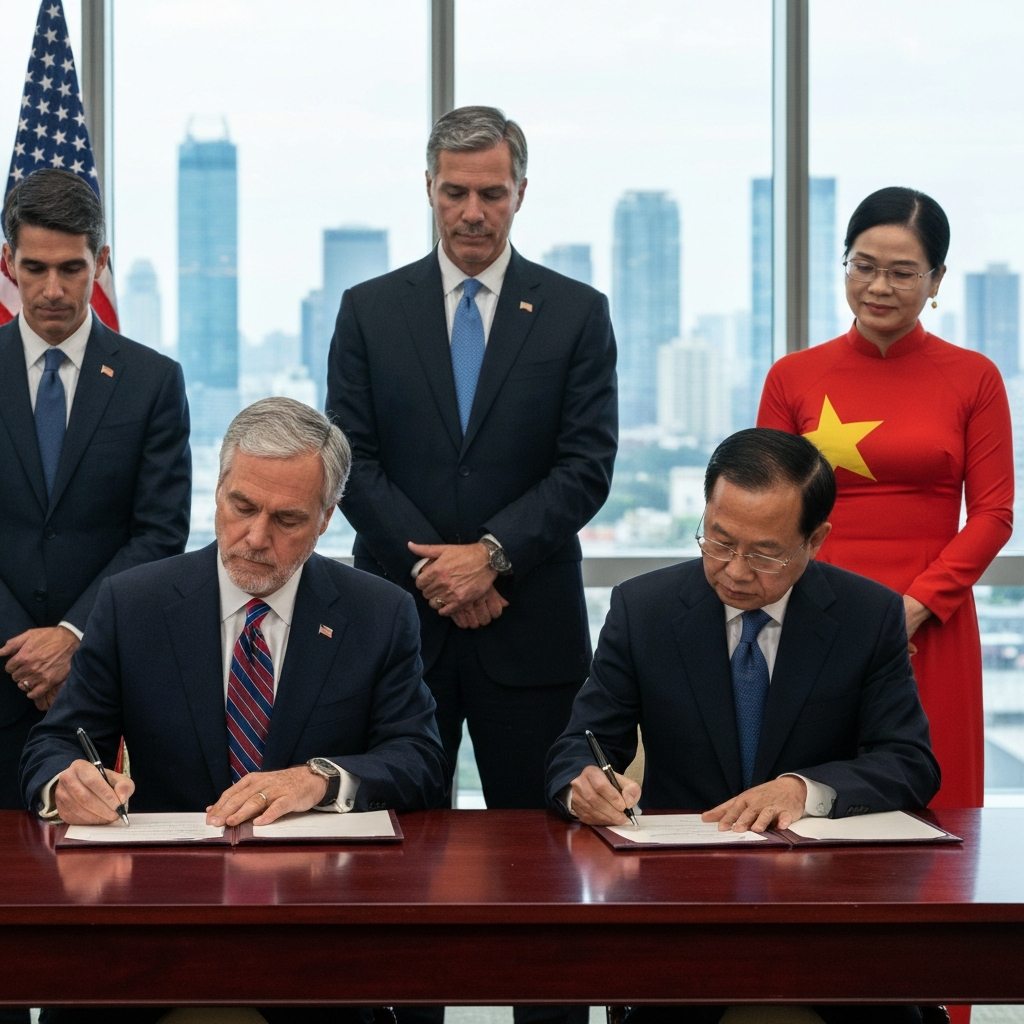
The trade relationship between the United States and Vietnam has undergone significant transformations over the past few decades. From the reestablishment of economic ties in the 1990s to the recent negotiations on reciprocal trade agreements, both nations have demonstrated a commitment to fostering a robust economic partnership.
Historical Context
After more than two decades without economic relations following the Vietnam War, the U.S. and Vietnam reestablished trade ties in the 1990s. This period marked the beginning of a new chapter, with bilateral trade growing steadily over the years. The signing of the U.S.-Vietnam Bilateral Trade Agreement in December 2001 was a pivotal moment, leading to a 1,200% increase in bilateral trade turnover from $1.5 billion in 2001 to over $20 billion in 2011.
Recent Developments
In July 2025, the U.S. and Vietnam announced the Agreement on Reciprocal, Fair, and Balanced Trade. This framework aims to strengthen bilateral economic relations by providing unprecedented market access for exporters from both countries. Key provisions include reducing the Liberation Day tariff rate from 46% to 20% and addressing non-tariff barriers, with Vietnam agreeing to align certain regulatory standards with those of the U.S.
Economic Impact
As of 2024, Vietnam ranked sixth among the U.S.’s top trading partners by import value. The trade surplus reached a record high in 2024, amounting to over $123 billion, placing Vietnam fourth among countries with the highest trade surplus with the U.S.
Future Prospects
Both nations have expressed a commitment to ongoing dialogue to address trade imbalances and enhance cooperation. The U.S. has pledged to continue collaborating with Vietnam to resolve issues affecting bilateral trade relations, while Vietnam has proposed that the U.S. recognize it as a market economy and remove export restrictions on certain high-tech products.
In conclusion, the evolving trade dynamics between the U.S. and Vietnam reflect a mutual interest in deepening economic ties. Continued negotiations and cooperative efforts are expected to further strengthen this partnership, benefiting both economies in the long term.