
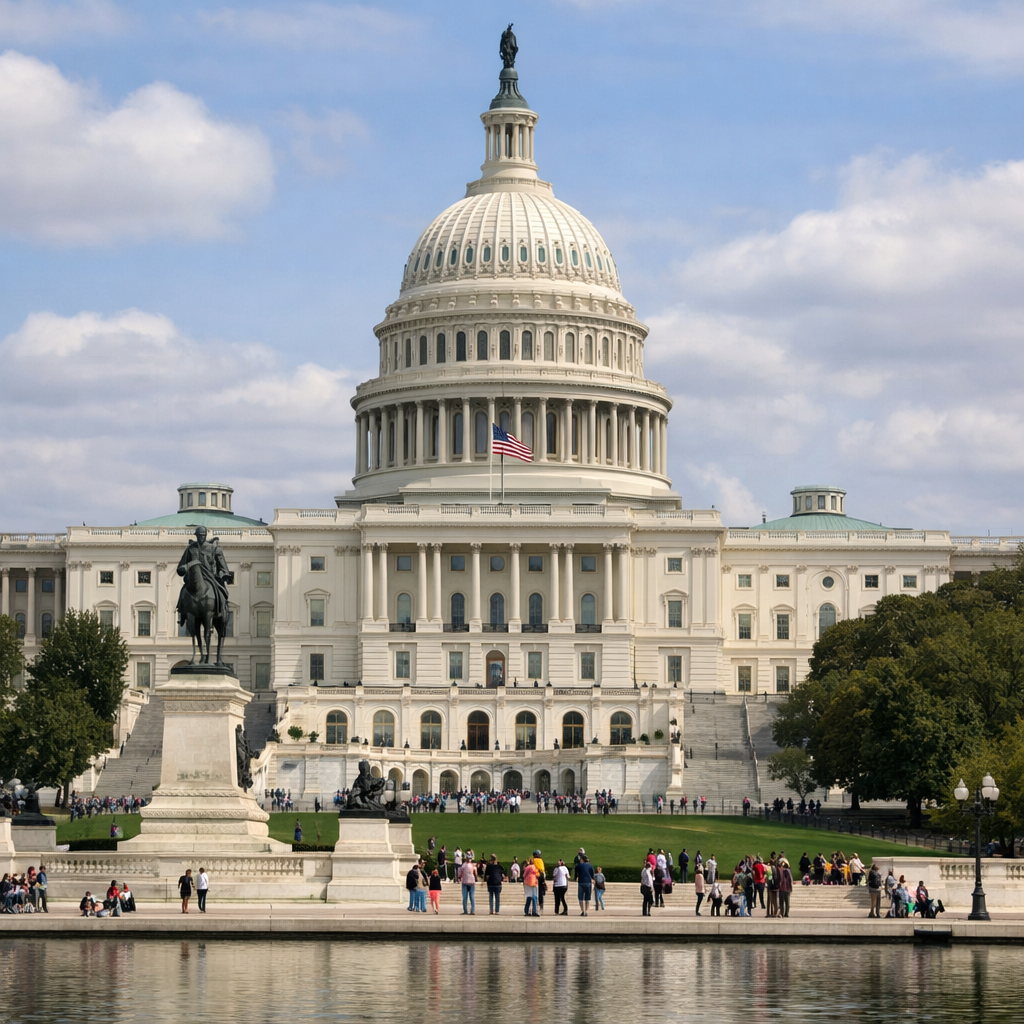
The United States operates under a federal constitutional democracy, characterized by a division of powers among three branches: the Executive, Legislative, and Judicial. This structure ensures a system of checks and balances, preventing any single branch from gaining excessive authority.
Executive Branch
The Executive Branch is headed by the President, who serves as both the head of state and government. Elected every four years, the President is limited to two terms. The President’s responsibilities include enforcing federal laws, conducting foreign policy, and serving as the Commander-in-Chief of the armed forces.
Legislative Branch
Congress, comprising the Senate and the House of Representatives, forms the Legislative Branch. The Senate consists of 100 members, with each state represented by two senators. The House has 435 members, with representation based on state populations. Congress is responsible for drafting and passing federal laws, controlling federal expenditures, and declaring war.
Judicial Branch
The Judicial Branch interprets laws and ensures they align with the Constitution. The Supreme Court, the highest court in the land, leads this branch. Justices are appointed by the President and confirmed by the Senate, serving lifetime terms to maintain judicial independence.
Federalism
The U.S. employs a federal system, dividing authority between the national government and individual states. Each state has its own constitution, government, and laws, provided they do not conflict with federal laws. This system allows states to address local issues while the federal government handles national concerns.
Two-Party System
American politics is dominated by two major parties: the Democratic Party and the Republican Party. This two-party system influences elections, policy-making, and political discourse. While third parties exist, they rarely achieve significant electoral success.
Electoral Process
Presidential elections occur every four years, utilizing the Electoral College system. Voters cast ballots for electors pledged to a candidate; these electors then vote to determine the President. This system means a candidate can win the presidency without securing the popular vote.
Understanding the U.S. political system provides valuable insights into its governance and international relations, including its interactions with Vietnam.