
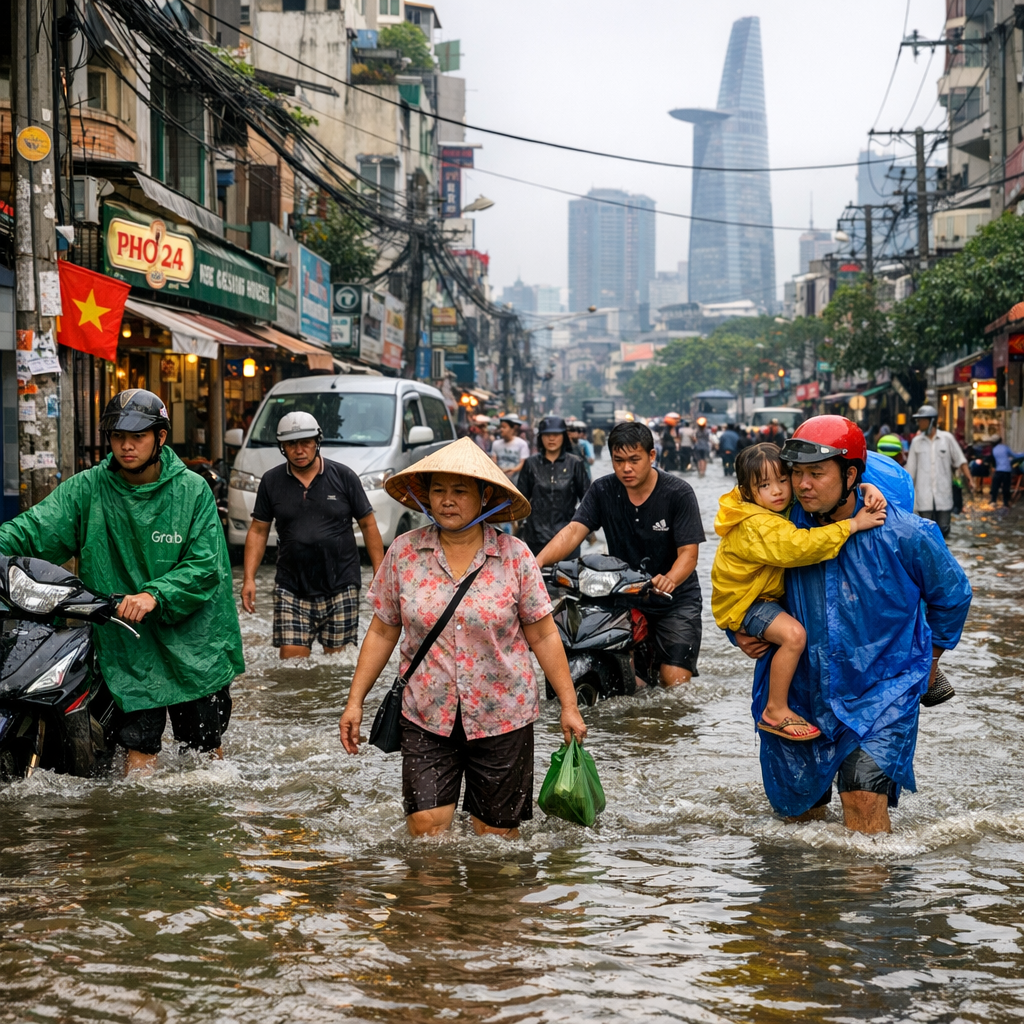
Ho Chi Minh City, Vietnam’s bustling economic hub, is grappling with increasing flood risks that threaten its infrastructure and residents’ livelihoods. Despite significant investments in flood mitigation, the city continues to experience severe inundation during heavy rains and seasonal high tides.
Persistent Flooding Challenges
Recent mid-autumn tide events saw water levels reaching 1.78 meters, submerging numerous streets and residential areas. Residents in districts like 7, 8, Nha Be, and Binh Chanh have reported worsening conditions, with streets turning into rivers and daily activities disrupted.
Contributing Factors
Experts identify several factors exacerbating the city’s flood risks:
- Land Subsidence: Over-extraction of groundwater has led to parts of the city sinking by more than 23 centimeters between 2005 and 2017. This subsidence reduces the effectiveness of existing drainage systems.
- Rapid Urbanization: The city’s swift expansion has paved over natural drainage areas, preventing rainwater from being absorbed into the ground and increasing surface runoff.
- Outdated Infrastructure: Existing drainage systems, designed for a smaller population and less intense rainfall, are now inadequate to handle current demands.
Community and Government Responses
In response to these challenges, local authorities are implementing measures such as sealing wells to curb groundwater extraction and investing in infrastructure upgrades. Community initiatives, including volunteer groups cleaning clogged canals, play a vital role in mitigating flood risks.
Looking Ahead
Addressing Ho Chi Minh City’s flood challenges requires a multifaceted approach, combining infrastructure improvements, sustainable urban planning, and community engagement. As the city continues to grow, proactive measures are essential to safeguard its future against escalating flood risks.