
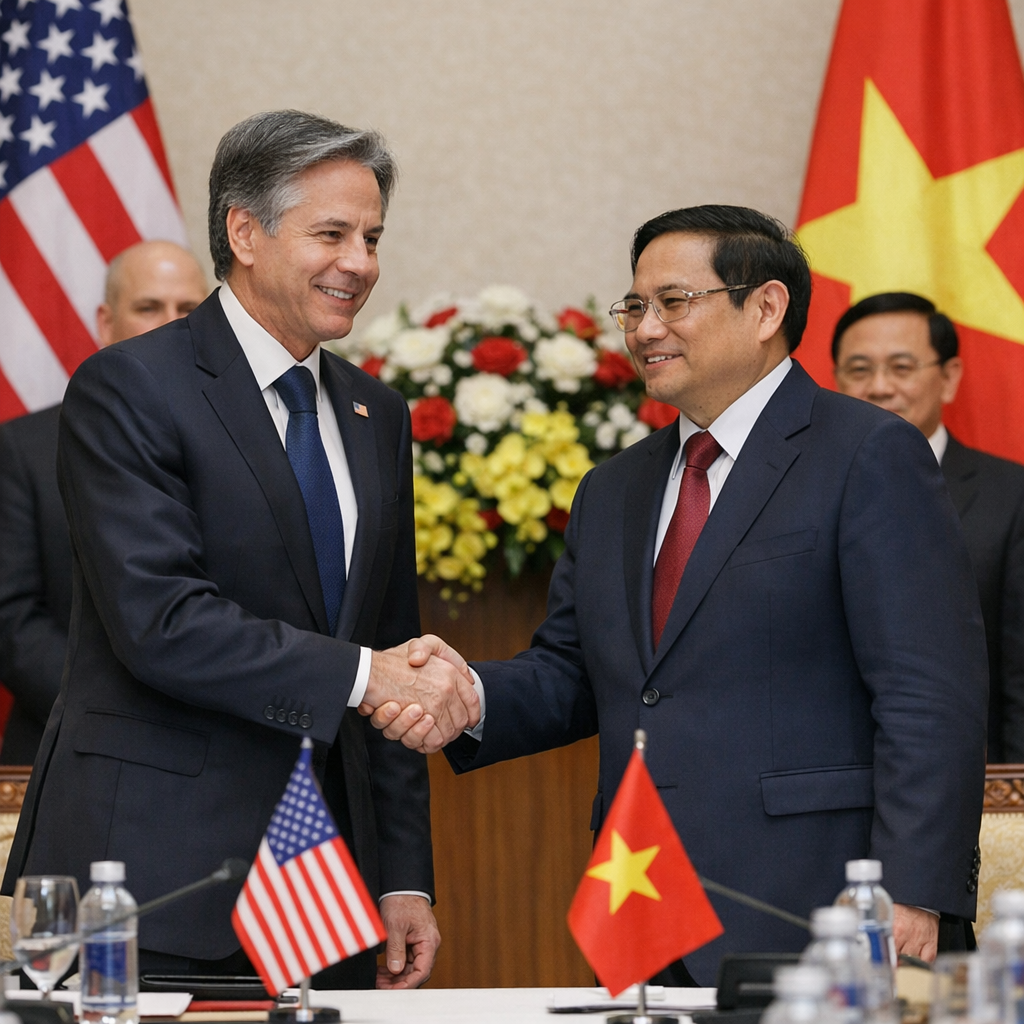
Over the past three decades, the relationship between the United States and Vietnam has transformed from former adversaries to strategic partners. This evolution is marked by significant milestones in diplomatic, economic, and security cooperation.
Diplomatic Milestones
In 1995, the U.S. and Vietnam normalized diplomatic relations, setting the stage for increased collaboration. This partnership was elevated in 2023 to a “comprehensive strategic partnership,” reflecting mutual interests in regional security and economic development. This status underscores the commitment of both nations to deepen their cooperation across various sectors.
Economic Collaboration
Trade between the U.S. and Vietnam has seen substantial growth. In 2024, bilateral trade reached an estimated $155.1 billion, marking a 20.5% increase from the previous year. This surge highlights the strengthening economic ties and mutual benefits derived from the partnership.
In October 2025, both countries agreed on a Framework for an Agreement on Reciprocal, Fair, and Balanced Trade. This framework aims to provide unprecedented market access for exporters from both nations, fostering a more balanced trade relationship. Key provisions include Vietnam offering preferential market access for U.S. industrial and agricultural exports, while the U.S. maintains a 20% reciprocal tariff rate on Vietnamese goods, with certain products receiving a zero percent tariff rate.
Security Cooperation
Beyond economic ties, the U.S. and Vietnam have expanded their security cooperation. This includes regular dialogues on defense and regional issues, reflecting shared concerns and interests in maintaining regional stability. The comprehensive strategic partnership provides a framework for collaboration in areas such as defense, law enforcement, and humanitarian assistance.
Looking Ahead
The deepening relationship between the United States and Vietnam signifies a commitment to mutual growth and regional stability. As both nations continue to collaborate, the partnership is expected to yield further benefits, not only for the two countries but also for the broader Southeast Asian region.