
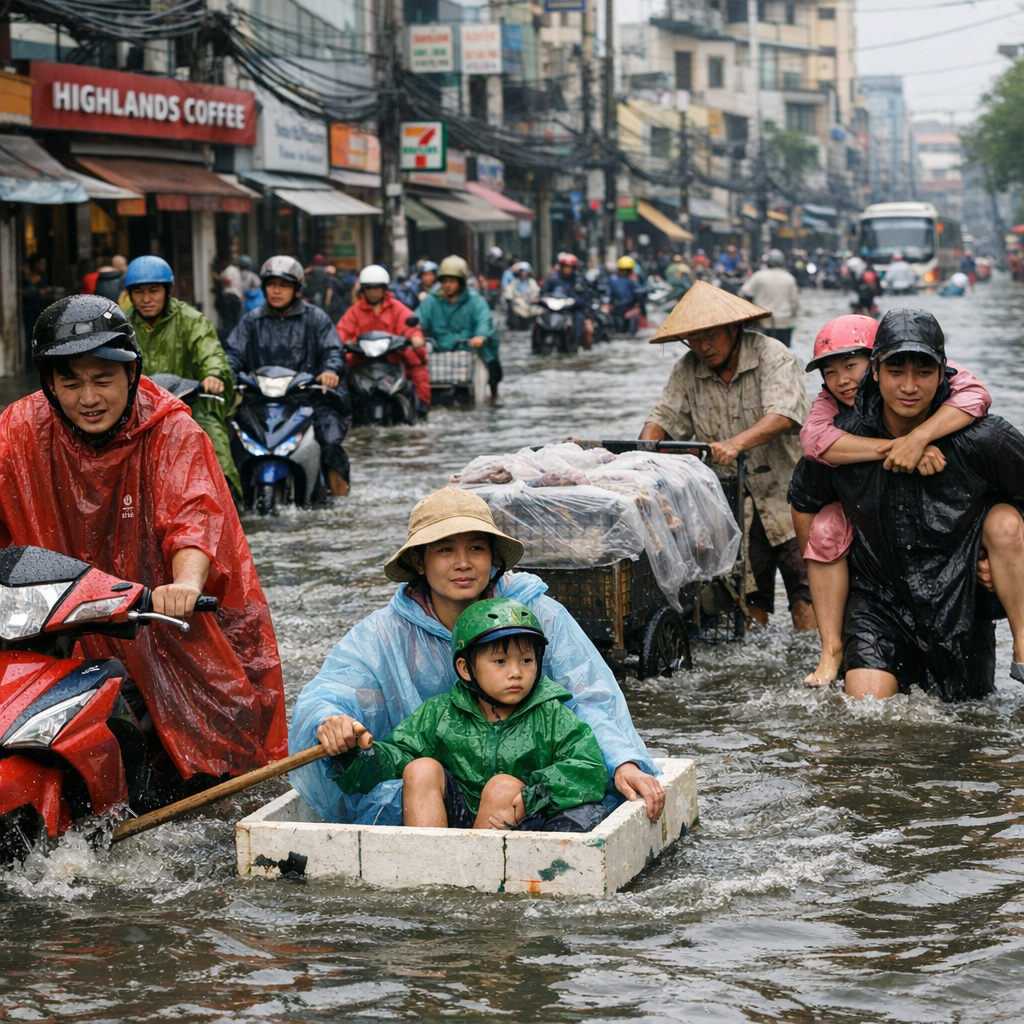
Ho Chi Minh City, Vietnam’s bustling economic hub, continues to confront significant flooding issues exacerbated by rapid urbanization, climate change, and infrastructural challenges. Despite various initiatives, residents frequently experience inundated streets and disrupted daily activities.
Urban Expansion and Climate Change Intensify Flooding
The city’s swift urban growth has led to increased impervious surfaces, reducing natural water absorption and escalating flood risks. Climate change further compounds the problem, with rising sea levels and unpredictable weather patterns contributing to more frequent and severe flooding events.
Infrastructure Projects Face Delays
Efforts to mitigate flooding through infrastructure development have encountered setbacks. The Government Inspectorate’s recent report highlights numerous violations in urban planning and construction between 2015 and 2022, leading to project delays and resource misallocation. These issues have hindered the timely completion of essential flood prevention measures.
Financial Constraints and Water Storage Limitations
Addressing the city’s 159 identified flooding points by 2030 requires implementing 157 projects with an estimated investment of nearly 340 trillion VND. However, current resources only cover about 30% of this need, posing significant challenges to effective flood management.
Community Impact and Environmental Concerns
Frequent flooding disrupts daily life, damages property, and poses health risks. Additionally, the accumulation of waste in waterways, despite cleanup efforts, exacerbates environmental degradation and hampers water flow, further intensifying flood conditions.
Moving Forward: Integrated Solutions Needed
To effectively combat flooding, Ho Chi Minh City must adopt a comprehensive approach that includes updating urban planning policies, securing adequate funding, enhancing infrastructure resilience, and promoting community engagement. Collaborative efforts between government agencies, private sectors, and residents are crucial to developing sustainable solutions that address both immediate and long-term challenges posed by flooding.