

By Duc Do
Ho Chi Minh City’s culinary landscape never slows down. Whether you’re hunting for street‐side skewers, trying new restaurants, or exploring food trucks, there are always fresh angles to discover. Here are five key trends reshaping what and how we eat around Saigon.
1. International flavors land in new home‐bases
In Thu Duc’s Mena Town (188 Võ Văn Ngân), food lovers now have more reasons to visit—two major international restaurant brands recently opened side by side. The arrivals of Thai Siam Kitchen and Don Cipriani’s Italian Restaurant bring both Southeast Asian boldness and classic European finesse into this growing retail and lifestyle hub.
Meanwhile, in District 1, Union Square’s new food collective introduces four distinct concepts ranging from casual bites to elevated Vietnamese‐fusion dishes, changing what people expect from a city center dining destination.
2. Food trucks rolling into neighborhoods
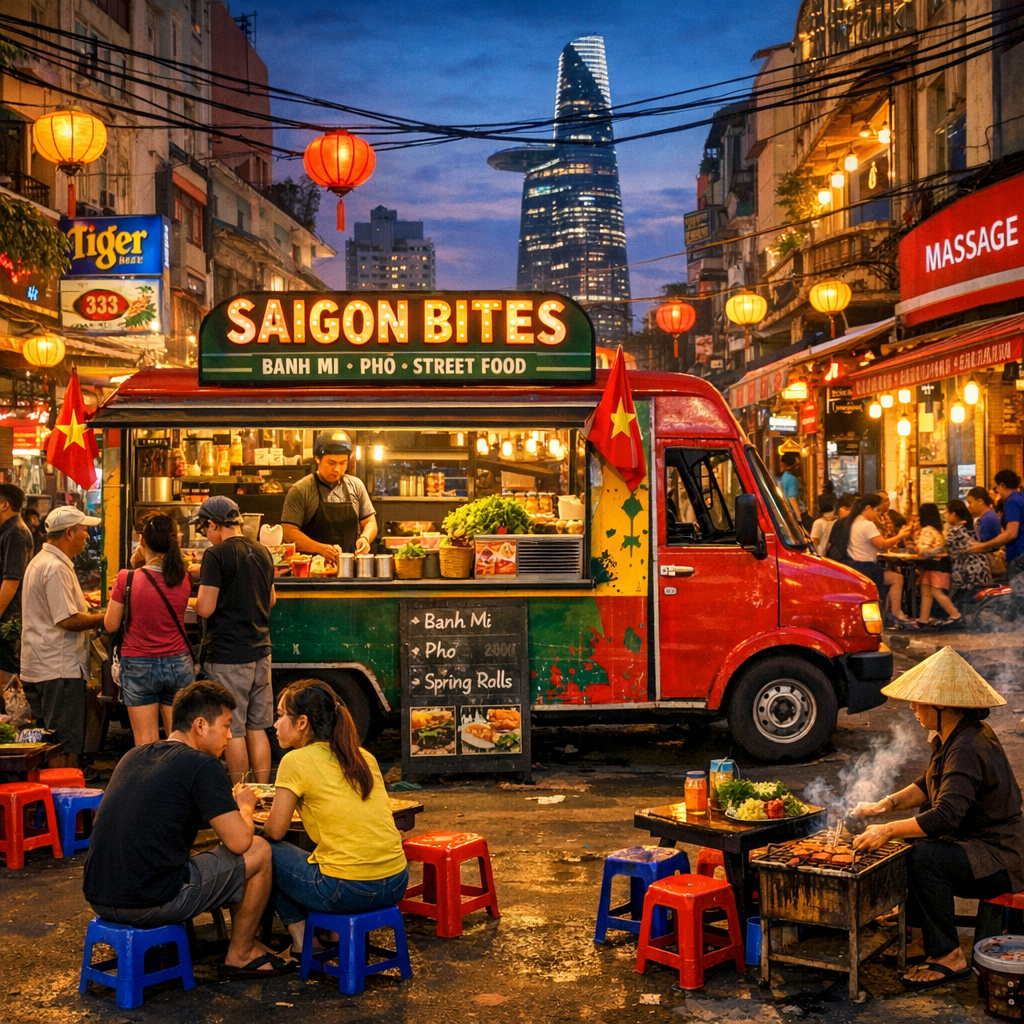
The food truck culture is gaining traction in Districts 1, 2, and 7. While carts and mobile vendors have always been part of Saigon’s rhythm, more established brands are now bringing polished mobile kitchens to the streets. Even well‐known chains like Pizza 4P’s have launched food trucks. The results? More variety on sidewalks, easier startup paths for entrepreneurs, and a more social outdoor dining vibe especially in the evenings.
3. Elevated local food tells the city’s culinary story
Local favorites are getting renewed attention—not just for nostalgia, but because their food continues to hold up under modern scrutiny. Places like Lunch Lady on Hoàng Sa serve a rotating daily lunch that draws regulars and visitors alike for the authenticity of dishes like <bún Thái and gỏi cuốn.
Also, casual carts and venerable stalls in areas like District 4, Vĩnh Khánh among them, remain strongholds for dishes like snails (“ốc”), pha lấu, and seafood grilled or stir‐fried fresh to order. These spots tell the story of flavor traditions that are still evolving.
4. Street food streets: more than just alley eats
Districts 3 and 4 are showing how street food has become part of urban nightlife. Ho Thi Ky Food Street in District 10, Turtle Lake in District 3, and alleys off Vĩnh Khánh come alive after 6 p.m. Vendors selling rice paper rolls, mixed spring rolls, grilled meats, sweet soups, and more create a sensory tapestry. Part of the appeal is the casual scene—plastic stools, shared tables, chatter, and the smell of sauces giving way to steam and fire.
5. Expectations on presentation and atmosphere rise
Even in neighborhood restaurants, customers are increasingly seeking more than just flavor—ambience, creativity, and thoughtful touches are now part of the dining package. Interiors are well designed, plating is more decorative, and drinks are being given as much attention as food. An older casual Vietnamese restaurant may now serve your cơm tấm on a wooden board instead of a metal tray, pair it with a carefully brewed specialty coffee, or offer seating with views rather than just under a tarp.
What to watch next
Keep your eyes on smaller districts like Phú Nhuận or Tân Bình for hidden gems. Also, as rents rise, more street vendors may evolve into pop‐ups or hybrid café‐truck models. Wherever you eat, the core of Saigon’s allure remains unchanged: food is best when shared, bold, and bursting with familiarity and surprise.