

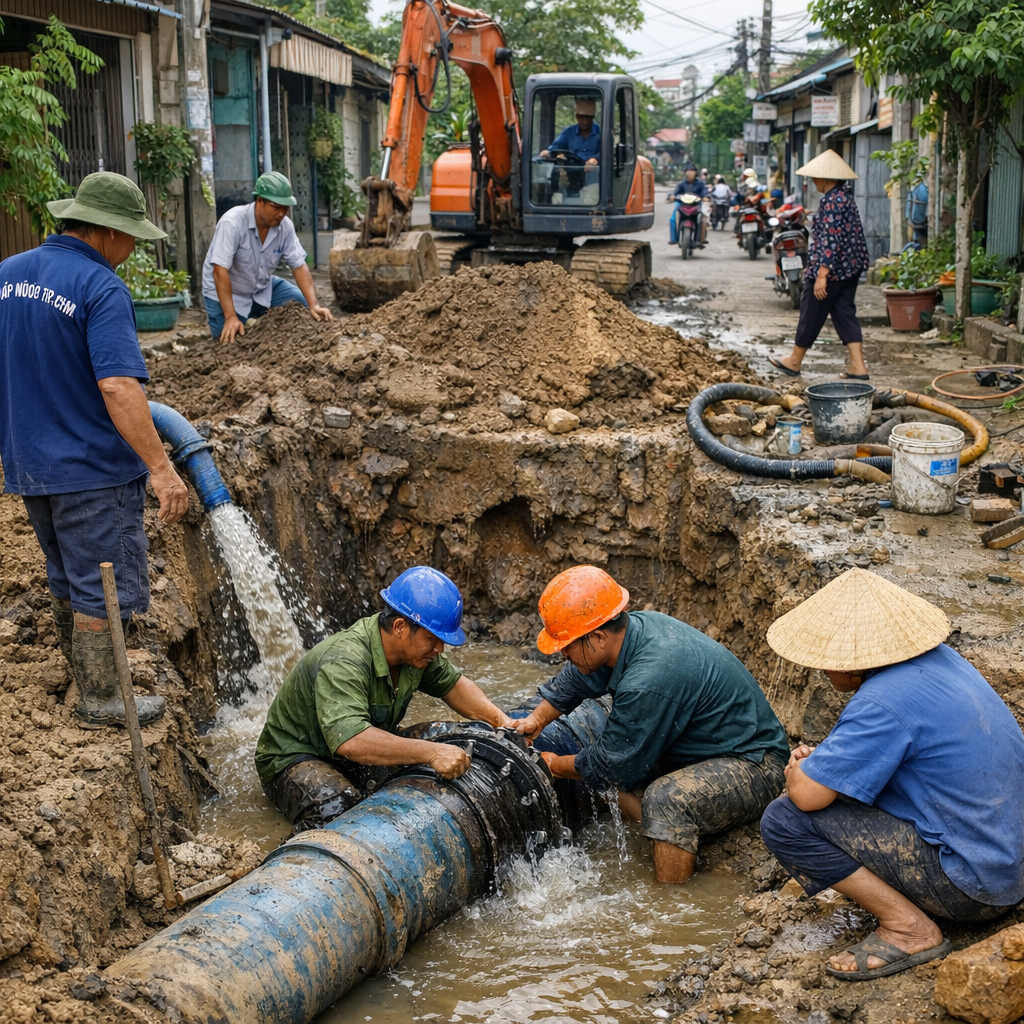
Across the outskirts of Ho Chi Minh City, communities in xã Đất Đỏ, Phước Hải, Hồ Tràm and Nhà Bè have faced escalating concerns over water supply. These include low pressure, murky water, and periodic shortages — especially during dry spells. Residents are pressing for more transparent solutions and urgent action from authorities.
What Residents Are Experiencing
In Nhà Bè, many report water coming out of taps as yellowish or brown, with pressure so weak in some zones that water barely reaches second floors. Some have gone without stable water for days. Analogous issues appear in rural xã Đất Đỏ, Phước Hải and Hồ Tràm, where households rely on stored water or bottled supply just to meet basic needs. The lack of reliable clean water is affecting daily life and heightening health concerns.
Underlying Causes
- Infrastructure constraints: Older pipes, long stretches from treatment plants to homes, and sections far from pressure boosters result in delivery problems.
- Poor quality control: Discolored water often results from rust buildup, sediment in pipes, or inadequate flushing. Some water storage systems and shared tanks in residential blocks are not cleaned or monitored to standard.
- Climate and seasonality: Dry season spikes, potential El Niño effects, and higher demand combine to stress the system, especially in areas where supply is already marginal.
- Insufficient investment: Delays in upgrading treatment plants and expanding capacity means pressing dilemmas remain unresolved.
What the Authorities Are Doing
The government and SAWACO (the city’s water utility) have stepped in with a variety of measures:
- Boosting capacity of key plants — like allowing the Long Tân plant to extract more groundwater temporarily to meet peak demand.
- Repairing leaks, replacing old pipes, and installing modern measurement tools to reduce water loss.
- Responding to reports of poor water quality — flushing pipes overnight, issuing temporary fixes, and pledging credits for affected households.
- Committing to long-term projects, including upgrading the Đá Bàng and Sông Ray water treatment plants to increase throughput.
What Still Needs Close Attention
- Transparency and communication: When disruptions or quality issues arise, residents want clearer warnings, data on water tests, and firm timelines for fixes.
- Accountability in shared systems: Condominium tanks, communal storage, and rental homes need stricter oversight to ensure hygiene and safety standards.
- Targeted infrastructure upgrades: Pressure boosters, shorter transmission routes, and better maintenance in outlying wards are crucial.
- Environmental resilience: Preparing for longer dry seasons and variable rainfall through more water-sensitive planning is needed.
Why This Matters for Everyone
Access to clean water is fundamental. Beyond inconvenience, unsafe or unreliable water supplies risk health, impose extra expense, and hit vulnerable households hardest. Addressing these issues now helps prevent bigger crises later — both for suburban communities and for the city at large.
As the city expands outwards, it’s essential that infrastructure and service keep pace. Residents, civil society and local media can help by asking questions, demanding openness, and pushing for timely, equitable solutions.