
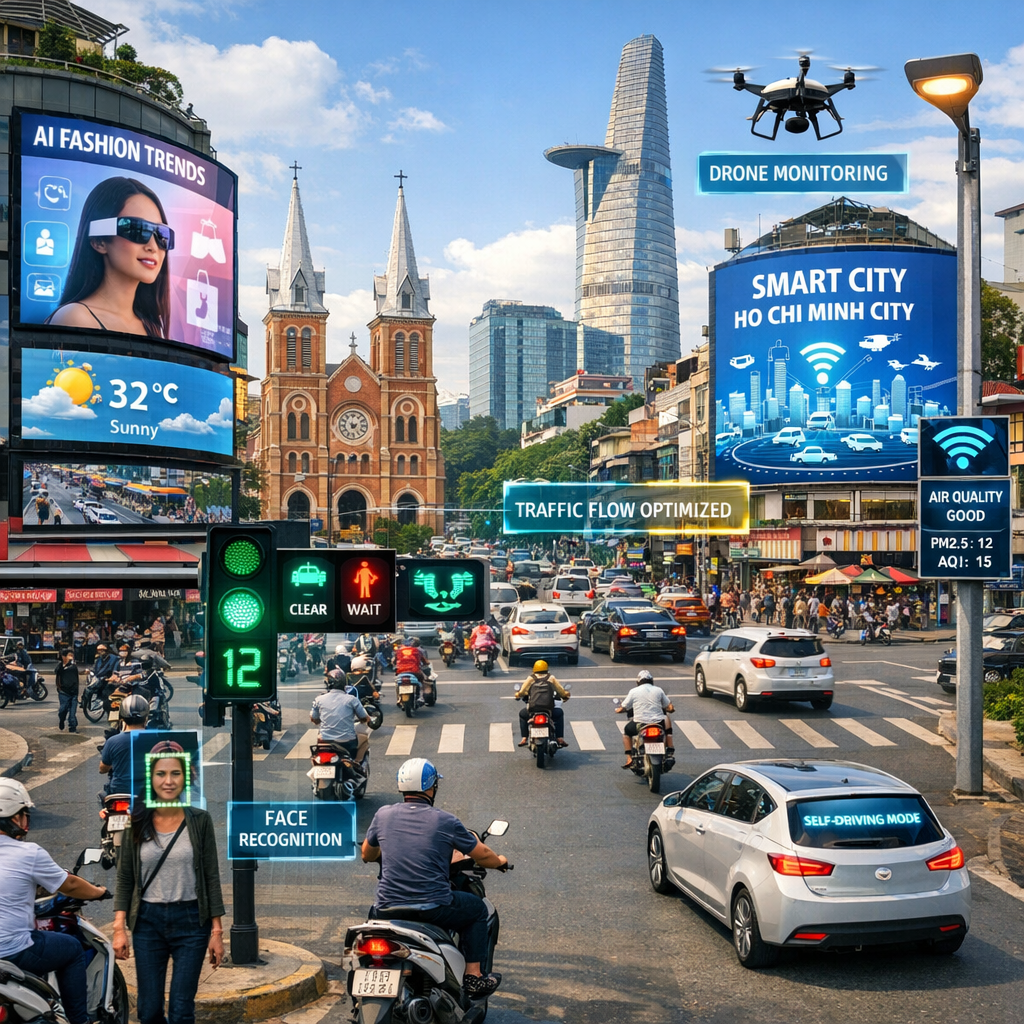
Artificial Intelligence (AI) is increasingly becoming a cornerstone of innovation in Ho Chi Minh City, influencing various sectors and the daily lives of its residents. From healthcare to education and transportation, AI-driven solutions are enhancing efficiency and offering new possibilities.
Healthcare Advancements
In the healthcare sector, AI applications are streamlining patient care and diagnostics. For instance, AI-powered systems assist in analyzing medical images, leading to quicker and more accurate diagnoses. This not only improves patient outcomes but also alleviates the workload on medical professionals.
Educational Innovations
Education is another area experiencing significant AI integration. Personalized learning platforms utilize AI to adapt educational content to individual student needs, fostering a more engaging and effective learning environment. Additionally, AI-driven administrative tools are optimizing school operations, allowing educators to focus more on teaching.
Transportation Enhancements
Transportation in Ho Chi Minh City is also benefiting from AI technologies. Traffic management systems powered by AI analyze real-time data to optimize traffic flow, reducing congestion and commute times. Moreover, AI is integral to the development of smart public transportation systems, enhancing reliability and user experience.
Community Engagement and AI Literacy
Recognizing the importance of AI literacy, the city has initiated programs to educate its citizens. The AI for Citizens Program aims to train 15% of the population in AI by 2030, equipping residents with the skills to navigate and contribute to an increasingly digital society. This initiative underscores the city’s commitment to building a tech-savvy workforce for the digital economy.
Local AI Startups and Research Hubs
The city’s vibrant startup ecosystem is a testament to its AI-driven growth. Companies like VIESG are developing computer vision and edge AI solutions, addressing real-world challenges with innovative technologies. Additionally, the establishment of the Saigon AI Hub provides a collaborative space for researchers and technologists to develop AI applications that address socio-economic challenges, particularly in key sectors such as healthcare, education, and transportation.
Conclusion
As AI continues to permeate various aspects of life in Ho Chi Minh City, it brings both opportunities and challenges. Embracing these technologies while fostering an inclusive and informed community will be crucial in ensuring that the benefits of AI are realized across all sectors of society.