
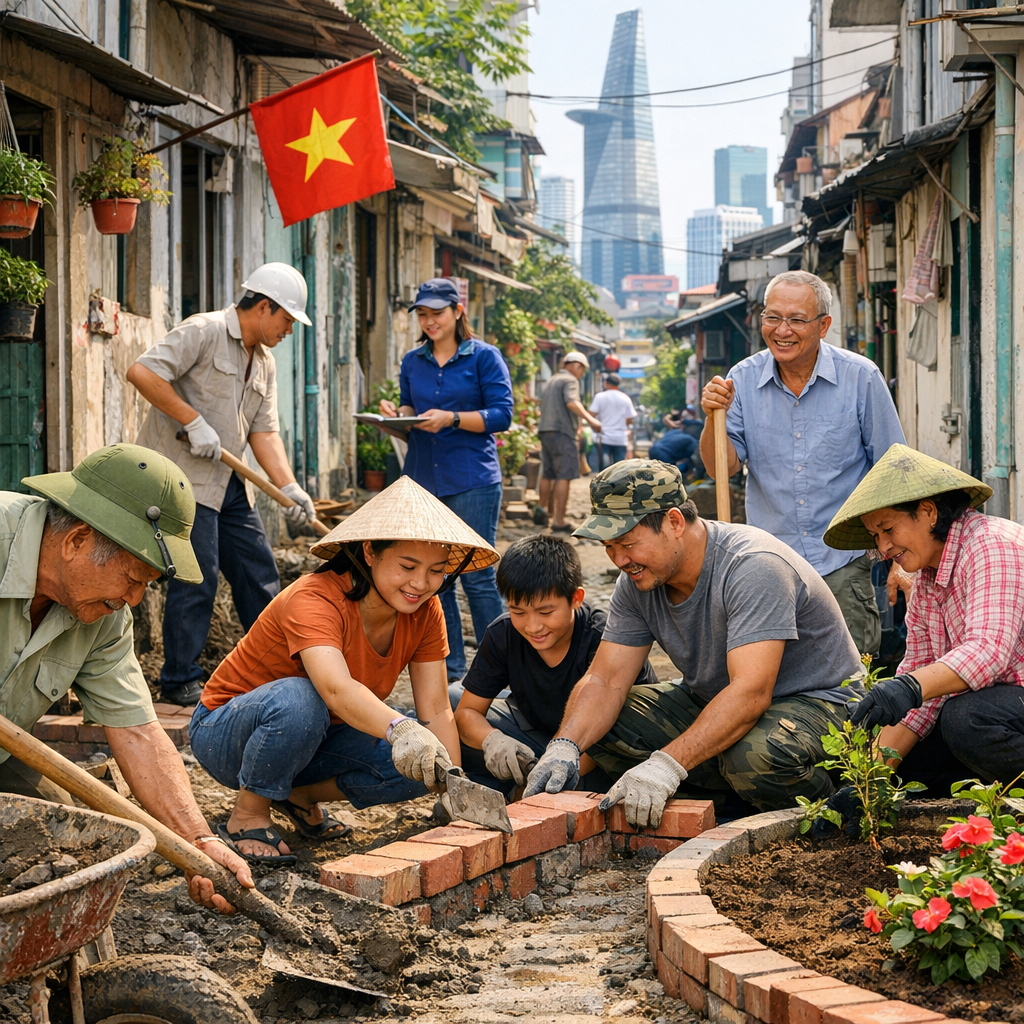
Ho Chi Minh City, a vibrant metropolis, has long been a beacon of cultural diversity and economic dynamism. Central to its ongoing development are the concerted efforts of local communities, organizations, and authorities working together to enhance the quality of life for all residents.
Urban Infrastructure and Quality of Life
Recent urban upgrading projects have significantly improved living conditions across the city. The rehabilitation of canals and the development of comprehensive infrastructure have directly benefited millions of households. For instance, the Green River apartment complex in Binh Dong Ward offers various community amenities, reflecting the city’s commitment to not just providing housing but ensuring a sustainable and livable environment. These initiatives underscore a shift from merely constructing new housing to fostering communities where residents can maintain their livelihoods and social connections. Source
Social Welfare Initiatives
Community-driven programs play a pivotal role in supporting vulnerable populations. Initiatives like zero-cost markets and community meals have been established to assist those in need. For example, the Public Administrative Service Center in An Phu Dong Ward hosts events distributing essential goods to workers and residents facing difficult circumstances. These efforts, funded by local officials and staff contributions, exemplify the city’s dedication to ensuring no one is left behind. Source
Empowering Youth for Sustainable Development
The city’s youth have been instrumental in driving socio-economic progress. Members of the Ho Chi Minh Communist Youth Union have demonstrated a pioneering spirit and deep sense of responsibility through large-scale volunteer programs. Their involvement in various initiatives has not only contributed to the city’s development but also inspired similar movements nationwide. Source
Preserving Cultural Heritage Amidst Modernization
As the city modernizes, efforts to preserve cultural heritage remain crucial. The revitalization of areas like the Kênh Tẻ Canal involves participatory methods that engage local communities in sustainable urban planning. This approach aims to balance development with the preservation of cultural identity, ensuring that modernization does not come at the expense of the city’s rich history. Source
Conclusion
The collective efforts of Ho Chi Minh City’s residents, organizations, and authorities highlight the power of community-driven development. By focusing on sustainable infrastructure, social welfare, youth empowerment, and cultural preservation, the city continues to evolve as a dynamic and inclusive urban center. These initiatives serve as a testament to the resilience and collaborative spirit of its people, paving the way for a prosperous future.