

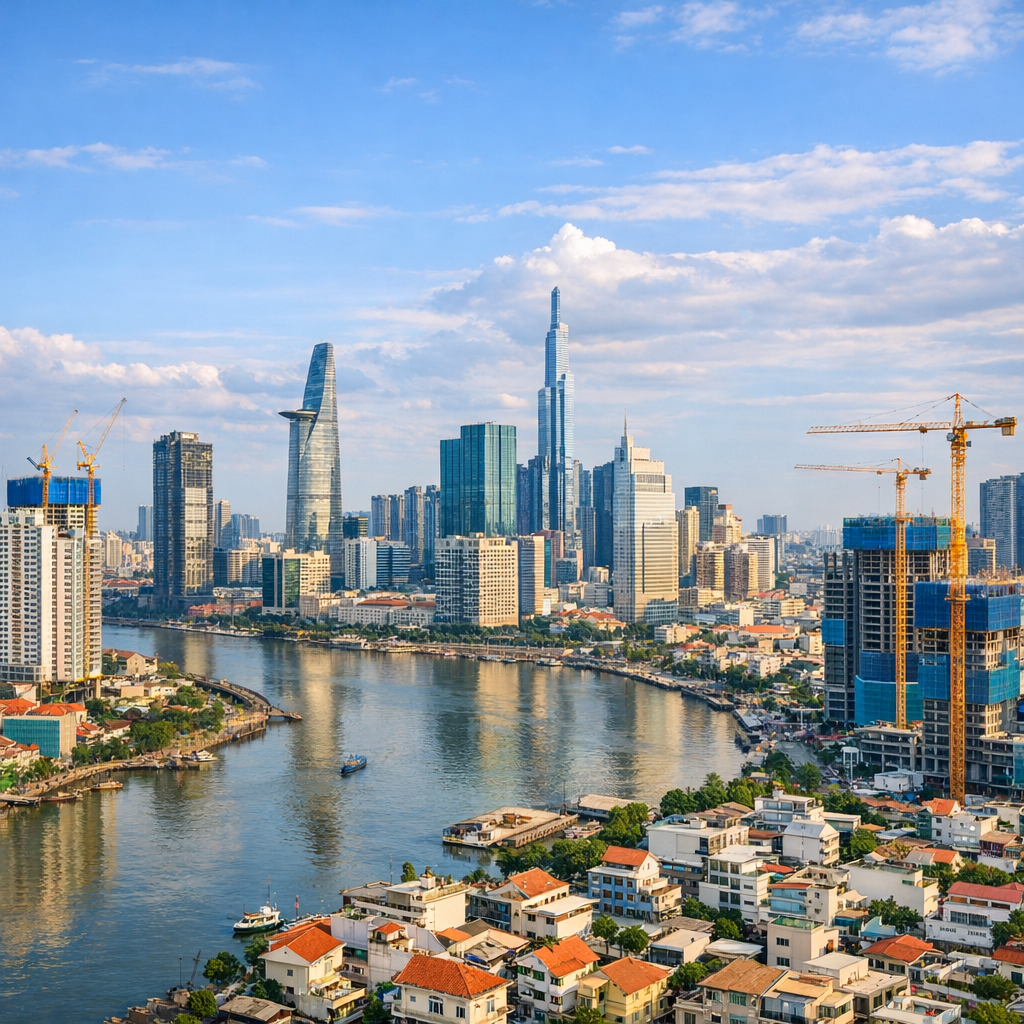
Ho Chi Minh City’s real estate market is undergoing significant transformations, influenced by various economic and social factors. Understanding these changes is crucial for potential buyers, investors, and residents.
Shifts in Supply and Demand
Recent data indicates a notable decline in new apartment launches within the city’s core areas. In the first quarter of 2026, approximately 1,200 new units were introduced, marking a 62% decrease compared to the previous quarter. This reduction reflects a cautious approach from developers amid evolving market conditions.
Conversely, satellite regions such as Binh Duong and Ba Ria–Vung Tau have experienced a surge in new developments, with over 7,000 new units launched and more than 6,100 transactions recorded. This trend underscores a growing preference for more affordable housing options in suburban areas.
Pricing Dynamics
The average primary price for apartments in Ho Chi Minh City’s core has reached nearly USD 7,300 per square meter, a significant increase of approximately 19% quarter-on-quarter and 53% year-on-year. This upward trajectory is influenced by rising input costs and adjustments in mortgage interest rates.
In contrast, the landed property segment has seen a shift towards peripheral areas, with new supply concentrated in regions like Can Gio. The average primary market sales price across the entire market is recorded nearly USD 7,200/m², with premium submarkets like former Thu Duc City reaching over USD 15,000/m².
Market Outlook
The real estate market is entering a new cycle characterized by increased supply following a period of stagnation. Large-scale urban projects, particularly in suburban areas, are expected to drive growth. However, the market is also experiencing price differentiation, with strategically located properties in central areas maintaining high value.
For those considering entering the market, it’s essential to stay informed about these evolving trends and consult with local real estate professionals to make well-informed decisions.